
Solvent Dyes for Acrylic Sheets: PMMA Coloring from Casting to Extrusion
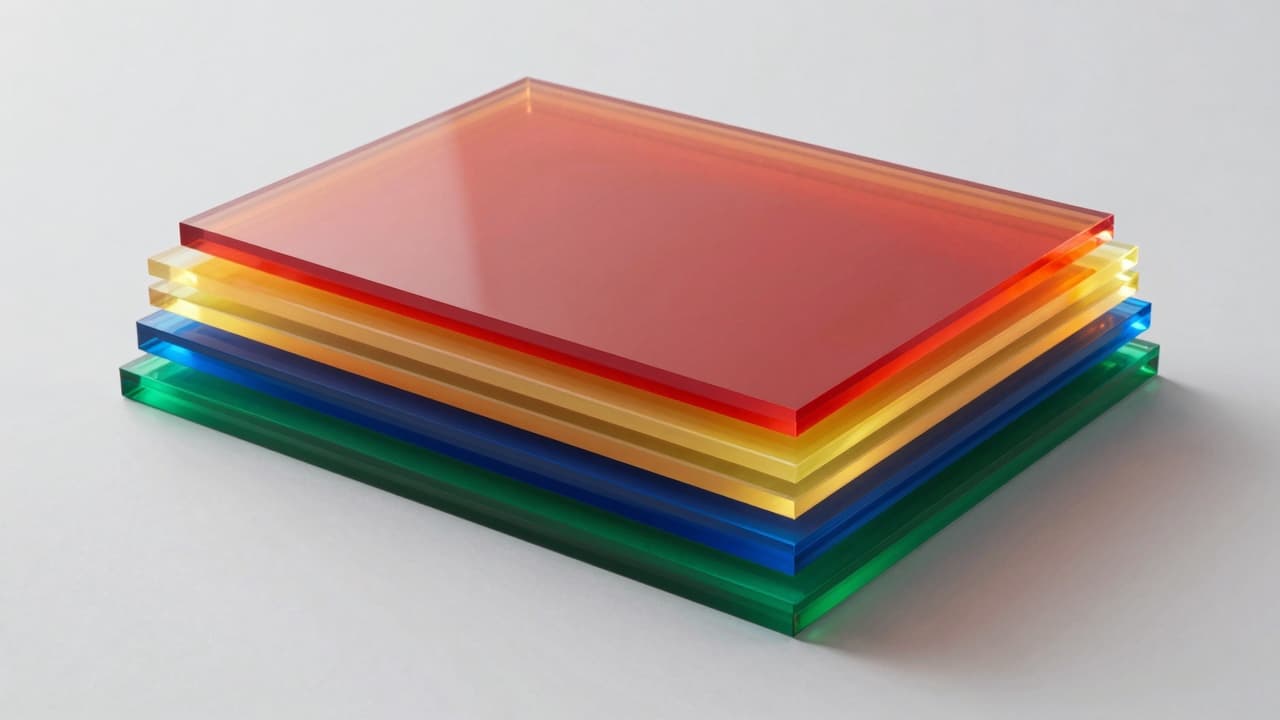
Acrylic sheet (PMMA, often called plexiglass) is known as the "crystal of plastics" for its 92% light transmission, serving advertising lightboxes, light guide panels (LGP), skylights, automotive tail lights and premium display fixtures. But virgin PMMA is colorless — coloring is the step that turns acrylic into a sellable, high-margin product. The industry's mainstream solution for transparent-sheet coloring is solvent dyes: oil-soluble dyes that dissolve at the molecular level into MMA monomer and the PMMA melt. Starting from the two acrylic production processes, this article explains exactly where and how to add solvent dyes, and the results you can expect.
I. Process First: How Are Acrylic Sheets Made?
Industrial acrylic sheet production runs on two process lines — casting and extrusion — and their coloring logic is completely different. Before selecting any acrylic sheet dye, be clear about which line your sheet comes from.
1. Casting (Cast Acrylic)
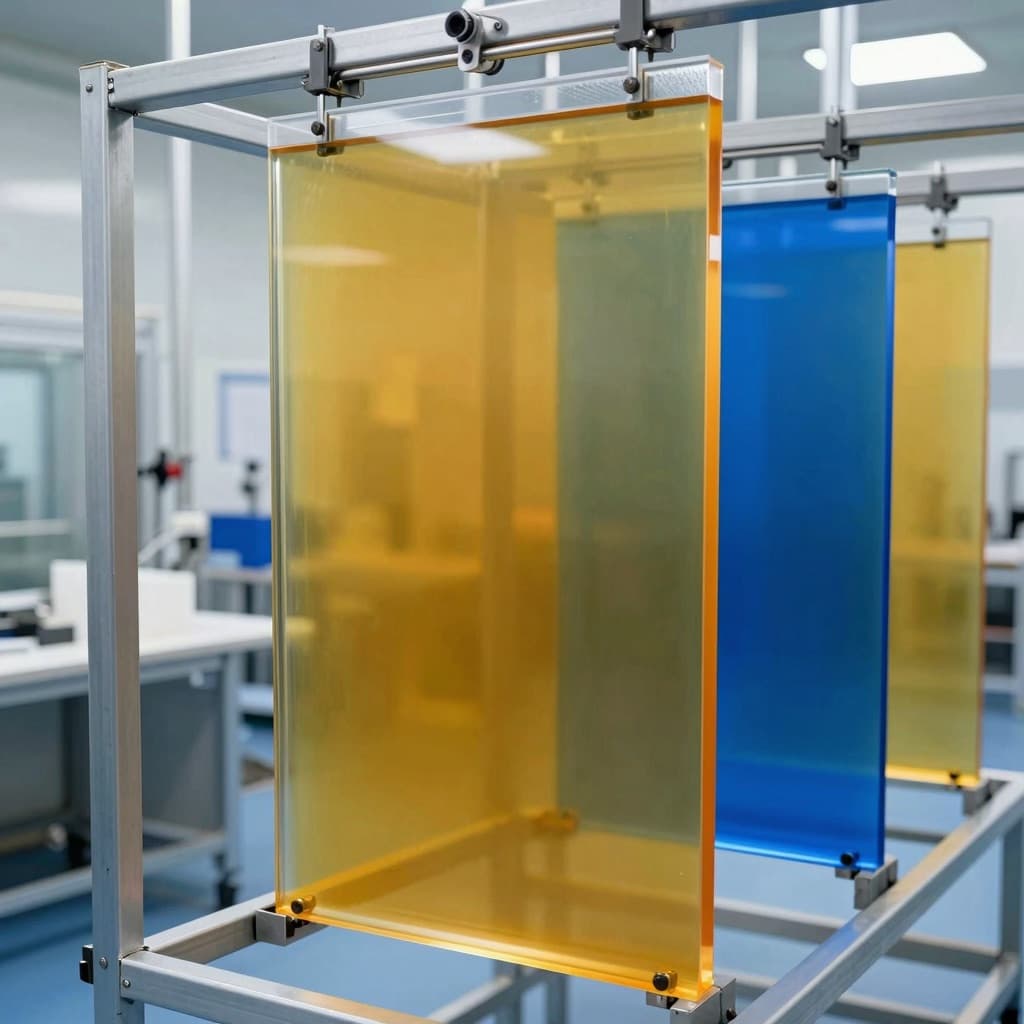 Colored PMMA syrup polymerizing inside glass molds in a cast acrylic plant
Amber and blue PMMA syrup polymerizing inside glass molds in a casting plant.
Casting goes "from monomer to sheet": MMA monomer is pre-polymerized with an initiator into a viscous syrup, the colorant is blended in, and the syrup is poured into molds built from two polished glass plates. Polymerization then proceeds slowly in a water bath or oven at 40–100°C for 10–20 hours before demolding.
Cast acrylic characteristics:
- High optical quality, thickness from 2 to 500 mm — ideal for thick, shaped and optical-grade applications
- Higher molecular weight, better weatherability and chemical resistance
- One batch per cycle (longer lead time), suited to small-to-medium runs and flexible color switching
2. Extrusion (Extruded Acrylic)
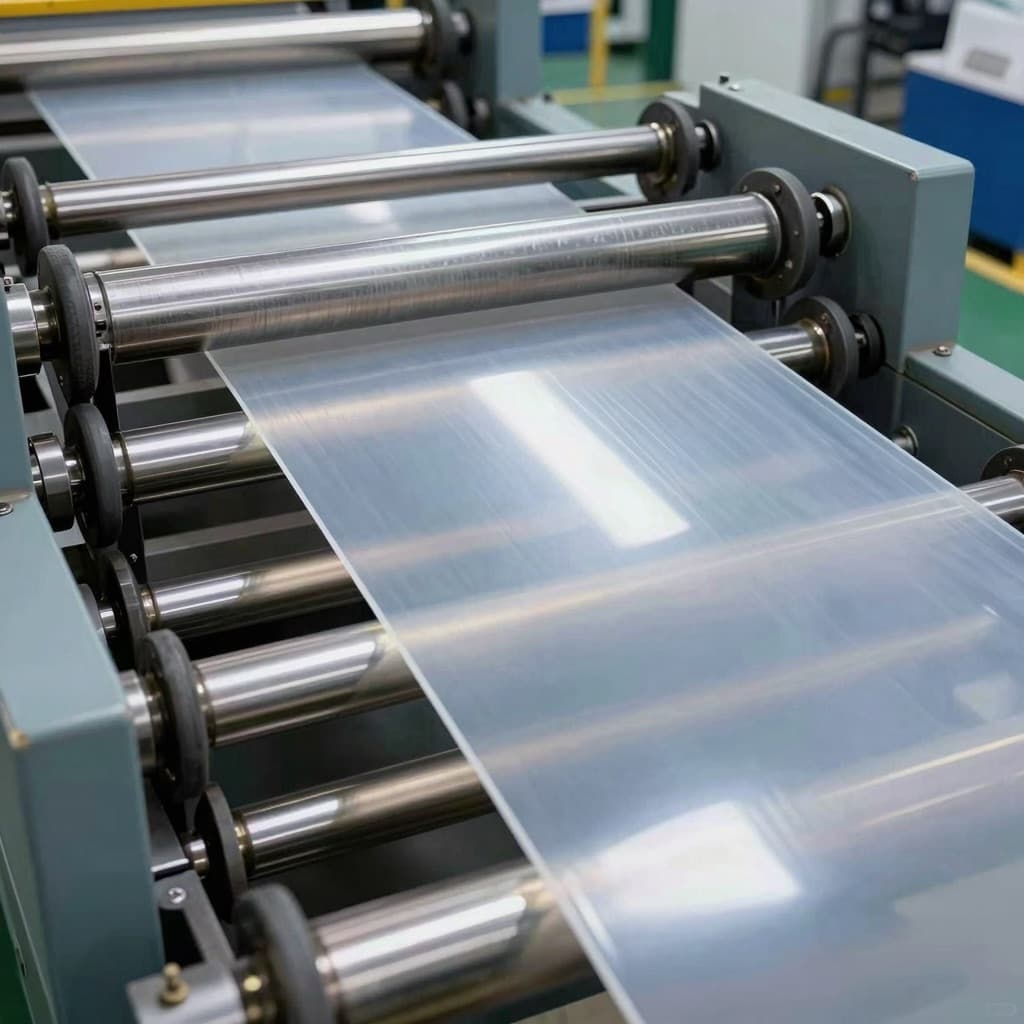 Transparent acrylic sheet calendered on an extrusion line
Transparent acrylic sheet calendered on an extrusion line.
Extrusion goes "from pellets to sheet": PMMA pellets are melted in a single-screw extruder at 220–260°C, formed continuously through a T-die and calendering rolls, then cooled, edge-trimmed, film-laminated and wound.
Extruded acrylic characteristics:
- Continuous production, high output, flexible width and length
- Thickness typically 1–20 mm with tight tolerances
- The workhorse for high-volume signage, light diffusers and lightbox panels
Casting vs. Extrusion at a Glance
| Item | Cast sheet | Extruded sheet |
|---|---|---|
| Processing temperature | 40–100°C (polymerization) | 220–260°C (melt extrusion) |
| Production mode | One batch per cycle, long lead time | Continuous, high output |
| Thickness range | 2–500 mm | 1–20 mm |
| Optical quality | Optical grade, low internal stress | Good, strong on thin gauge |
| Key dye requirement | Monomer solubility, light/weather fastness | High heat resistance, low volatility |
II. The Critical Step: Where and How to Add Solvent Dyes
1. Casting Line: Add During Syrup Preparation
On the casting line, the dye addition point is the syrup preparation stage — the only coloring "window" the whole process offers:
- Dissolve: weigh the solvent dye per the formula and dissolve it directly in MMA monomer (pre-dissolve with a small amount of co-solvent if needed); stir until fully transparent with no undissolved particles;
- Filter: pass the dye solution through fine filtration (typically 5–10 μm cartridges) to remove impurities and undissolved matter;
- Blend & degas: mix the dye solution into the pre-polymer syrup evenly, vacuum-degas, then pour into molds;
- Polymerize: transfer to the water bath/oven and follow the heating curve through polymerization and post-cure.
Casting never exceeds 100°C, so heat resistance of the dye is not the limiting factor. Three hard requirements are: good solubility in MMA monomer, no inhibition of free-radical polymerization, and high light/weather fastness (Grade 7+ is typically demanded for outdoor sheet). Missing any one shows up in the finished sheet as color specks, streaks, incomplete polymerization or outdoor fading.
Typical dosage for cast coloring is 0.01%–0.5% (based on syrup weight), lower for thick sheets — the thicker the sheet, the longer the optical path, and the deeper the color at the same concentration.
2. Extrusion Line: Compound First, or Side-Feed Directly
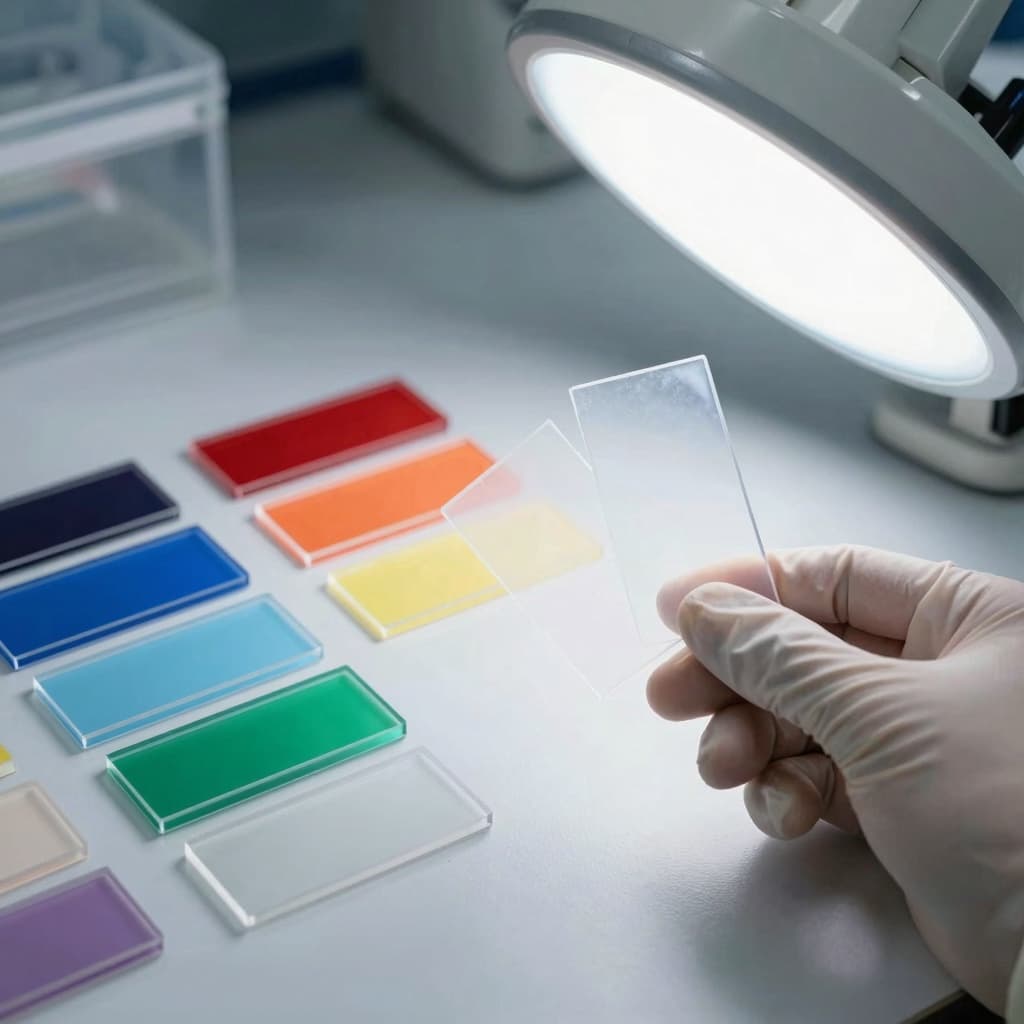 Color matching of dyed acrylic samples on a lab light table
Color matching of dyed acrylic samples on a lab light table.
Extrusion runs at 220–260°C, so the dye must survive high temperature and shear inside the screw. Two proven coloring methods are used in the industry:
- Pre-colored compound / masterbatch (recommended): first compound the solvent dye with PMMA carrier on a twin-screw line into colored pellets (PMMA color compound), then blend with natural pellets before extrusion. Best dispersion and smallest batch-to-batch variation — the choice for stable long-run supply;
- Direct metering: powder dye is dosed by volumetric or gravimetric feeders, pre-mixed with PMMA pellets, or side-fed at the side feeder port. Skips one compounding step, suited to small batches and trials.
⚠️ Selection note: dyes for the extrusion line must withstand ≥ 240°C with low volatility, otherwise you will see die-plate buildup, hue drift and gels/undispersed specks. Casting and extrusion can share the same shade of dye, but the heat-resistance selection logic is completely different — never select from a color card alone.
Typical dosage for extrusion coloring is 0.05%–1.0%, adjusted by target shade depth and sheet thickness.
III. What Results Can You Expect?
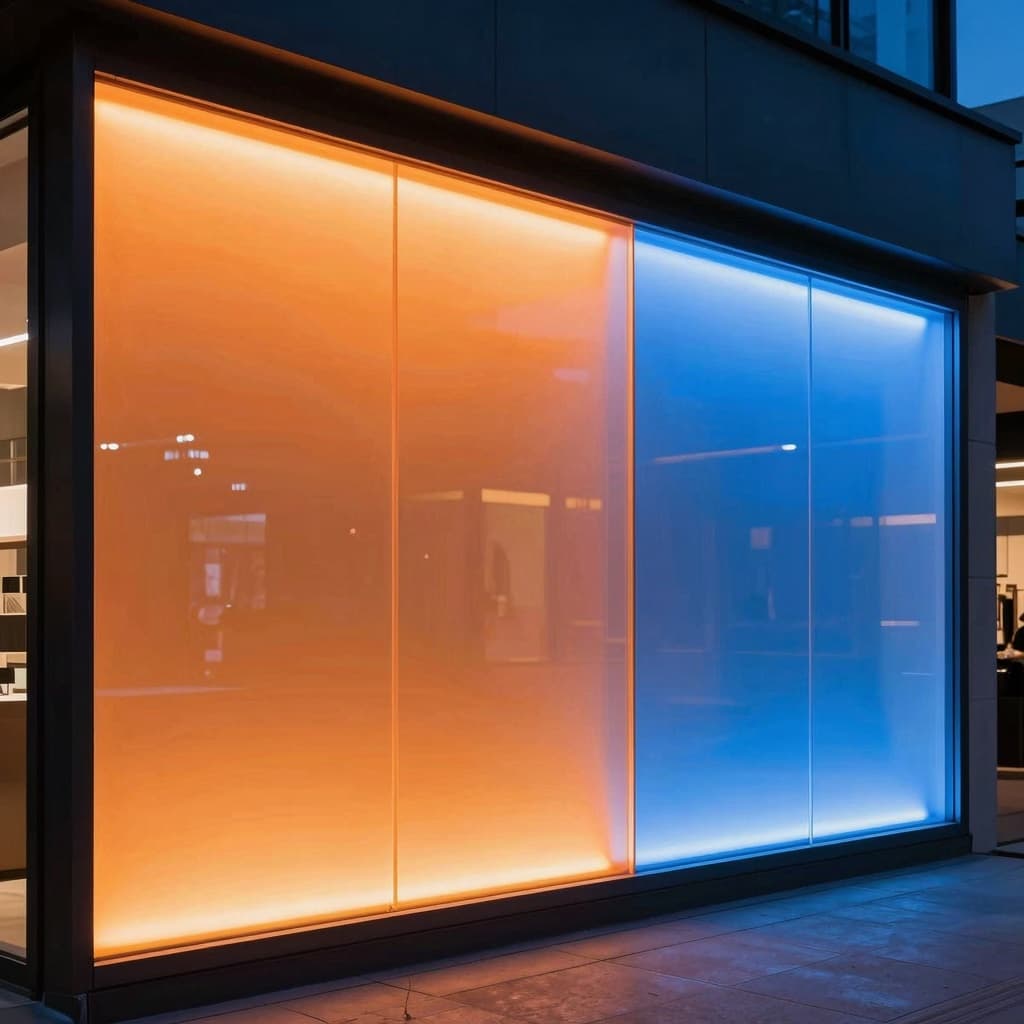 Colored acrylic light-transmitting panels colored with solvent dyes in lightboxes
Colored acrylic light-transmitting panels: rich, clear color in lightbox and light-guide applications.
With proper grade selection and process control, solvent-dyed acrylic sheet delivers:
✅ Full 92% transmission, kept "clean": the dye dissolves at the molecular level in PMMA with no particle scattering — transmission stays around 92% and the color stays clear instead of hazy;
✅ Even color, no specks or streaks: fine filtration plus molecular dispersion eliminate the color specks, stripes and clouds typical of pigment-based coloring;
✅ Tight batch-to-batch color: a stable formula keeps color consistent across batches, directly cutting scrap rates and rework downstream;
✅ Lasting weatherability: high light fastness (up to Grade 7–8 at 1/3 standard depth) keeps outdoor signage and skylights from fading for years;
✅ Clean after fabrication: after laser cutting, polishing and heat bending, cut edges and bent surfaces keep the same color with no visible migration or bloom — hard to achieve with organic pigments;
✅ Fluorescent options: fluorescent solvent dyes (orange, green and more) are available for advertising and entertainment scenes, with striking visibility under night lighting.
One more note for sheet destined for years of full sun: dye selection is only half of the weathering story. Pairing the colorant with a compatible UV absorber package slows both substrate yellowing and shade drift — our group's additives portal offers a dedicated UV absorbers for outdoor acrylic range worth reviewing together with the dye choice.
IV. Recommended Grades for Acrylic Coloring (By Process)
| Grade | Heat resistance / m.p. | Shade & features | Recommended process |
|---|---|---|---|
| Solvent Yellow 163 (SY 163) | 193°C | reddish yellow, excellent weather fastness | casting + extrusion, first choice for outdoor yellow |
| Solvent Red 111 (SR 111) | 170°C | bright yellowish red, economic grade | casting |
| Solvent Red 135 (SR 135) | 318°C | true red, ultra-high heat resistance | casting + extrusion, tail-light / outdoor red |
| Solvent Blue 104 (SB 104) | 220°C | reddish blue, clear and transparent | casting + extrusion |
| Solvent Green 28 (SG 28) | 245°C | bluish green, excellent heat resistance | extrusion |
| Solvent Violet 59 (SV 59) | 189°C | bluish violet, high tinting strength | casting + extrusion, outdoor |
| Solvent Orange 107 (SO 107) | 255°C | bright orange, strong heat resistance | extrusion, signage |
The table lists common recommendations. Final selection should weigh sheet thickness, target shade depth, outdoor service life and regulatory requirements — we provide free samples and formulation support.
V. FAQ
Q1: What is the best dye for coloring acrylic sheets?
A: Oil-soluble solvent dyes. They dissolve at the molecular level into MMA monomer and the PMMA melt, keeping ~92% light transmission without scattering; pigment-based colorants scatter and block light, and are not suitable for transparent sheet.
Q2: Can cast and extruded acrylic share the same dye?
A: Some grades can — for example high-heat types such as SB 104, SV 59 and SR 135. But for the extrusion line always verify heat resistance ≥ 240°C first, while for casting verify monomer solubility and light-fastness rating first. Never select from a color card alone.
Q3: How much solvent dye should be added to acrylic?
A: Casting: 0.01%–0.5%; extrusion: 0.05%–1.0%. Use the lower end for thick sheets and the higher end for thin ones. Always run a small trial to confirm shade depth before scaling up.
Q4: Does coloring affect acrylic's light transmission or mechanical properties?
A: At normal dosage (<1%), light transmission stays around 92% with no substantial effect on impact strength or heat-deflection temperature — provided the dye is fully dissolved with no residual particles.
VI. Why Choose Aolong Chemical?
✅ Six color series, 30+ solvent dye grades: red, yellow, blue, green, orange, violet — high formulation freedom
✅ Melting points from 170°C to 318°C: matched grades for both casting and extrusion lines
✅ High light fastness, Grade 7–8 (1/3 standard depth): proven in years of outdoor service
✅ Tight batch-to-batch color: supplied in volume to signage board, LGP and automotive-support customers
✅ B2B export friendly: bilingual (EN/CN) technical support, flexible CIF / FOB delivery
✅ Free samples + custom matching: trial shades built around your sheet thickness and target depth
Still deciding? Read our Solvent Dyes Selection Guide and Solvent Dyes in Action, or contact us directly for free samples.
📞 Contact Us
Need free samples, technical data sheets, quotations or a custom color-matching plan? Reach us any of these ways:
- Company: Aolong Chemical Co., Ltd.
- Email: sales@aolongchemical.com
- Phone: +86 571 86690377
- Website: www.aolongchemical.com
- Address: No. 1788 Jinggang Road, Shushan Economic Development Zone, Hefei, Anhui, China
Aolong Chemical — focused on thermochromic technology, lighting up the future of functional materials with color!